Out There: In the Wild in a Wired
Who hasn't wanted to get away from cell phones, e-mail, roads, and traffic? And what better place to escape our wired world than the far northwestern corner of Canada's northwest territories and a river that flows through uninhabited country, 400 miles to the Arctic Ocean. But what if your canoeing partner brings along a satellite phone to use in case of an emergency? And, struck by the novelty of anywhere-on-earth communication, he proceeds to use the phone to check in with his law office, his wife, kids, sisters, father, and friends?
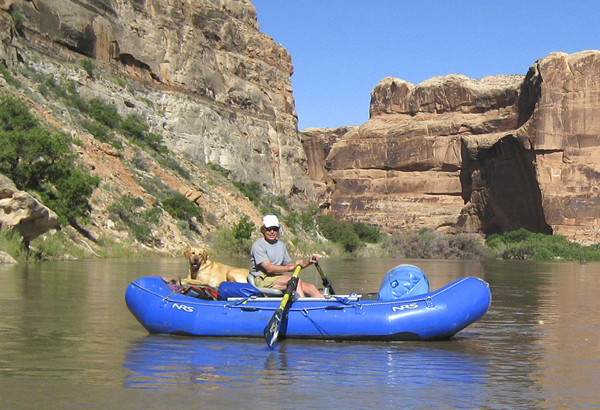
Ted Kerasote describes just such a situation as he journeys down the Horton River through the largest, ice-free, roadless area left on Earth, a stunning wilderness of grizzly bears, caribou, and migrating birds. Between navigating rapids, slipping around musk ox and grizzlies, and being pinned down by Arctic storms, the two friends prod each other into a finer understanding of love, marriage, parenting, and the meaning of solitude in an increasingly wired world.
Contrasting his own experiences with those of the region's earliest explorers—Sir John Franklin and Vilhjalmur Stefansson—Kerasote provides a compelling and humorous take on how travelers from any age adjust to being away from their civilizations and how getting "out there" has inevitably changed but has also remained the same—especially if you shut off the phone.
"Out There does a masterful job of debating the
dichotomy of adventure travel in a wired world."
"Kerasote has thought deeply about the
meaning of remoteness and solitude in an
age strangling from its cyberwires."
"Out There is far, far more than a macho 'there-
we-were' adventure story. It's a sly, funny,
wise look at a world beyond the walls that we
erect to keep ourselves safe from the
wilderness and to keep the wilderness safe
from us. Ted Kerasote is a fine literary
companion-poetic, honest and observant."
Bloodties: Nature, Culture, and the Hunt
For all readers who are perplexed over humanity's proper relationship to animals, Ted Kerasote's intriguing exploration of the ancient human urge to hunt will dramatize the issues that fuel this controversial debate. Living with Inuit in Greenland and accompanying wealthy trophy hunters, Kerasote describes two very opposite poles of the hunting world. He then examines his own relationship with the totemic animal of his homeplace, elk, and engages America's leading animal-rightist, Wayne Pacelle, from The Fund For Animals, in a vivid dialogue about the ethics of taking life. Scrupulously balanced, and with a rigorous enquiry into the ecological consequences of eating food produced by agri-business, Bloodties remains the definitive work on our evolving relationship to the nonhuman world.
"The world is lucky to have this book."
"Sad and strange, haunting and beautiful,
Bloodties contains perhaps all the honesty
and strength we can stand."
"The power of Bloodties lies in the way it forces
the reader to feel the inescapable tragedy of
being both part of nature and outside of it, of
having to participate in the violence of
sustaining life and yet having to be conscious
of the pain inevitably inflicted."
"Bloodties should be read by everyone who
hunts, so they can understand the real
meaning of their often degraded activity, and
by everyone who doesn't, so they can glimpse
some of the meaning yet remaining in this
oldest human pursuit."
Heart of Home: People, Wildlife, Place
Is home a place, a state of mind, or a way of participating in the natural world? Heart of Home makes the case for all three. These thoughtful and compelling essays showcase Ted Kerasote at his best, probing the evolving relationship between humans and nature. Whether fly-fishing for trout, coming eye-to-eye with coyotes, gauging the costs of logging, agriculture and hunting, or recounting the historic meeting between the fathers of American conservation, John Muir and Theodore Roosevelt, Kerasote eloquently illuminates an engrossing central theme: how we stay connected to Earth's cycles of life and death through mindful participation.
"Beautifully written, these essays will inspire all
who read them to reconsider their connection
with nature."
"Ted Kerasote belongs to that tradition of thoughtful writers whose subject is nature and how we relate to it."
"At once sensible and sensitive, by turns subtly
humorous and profoundly moving, Ted
Kerasote once again works his particular kind
of earth-magic. A warning: The heart he
breaks may be your own."
"Heart of Home expands our thinking as to our
authentic ties to animals and what the
appropriate role of the hunter might be."
Navigations, Ted Kerasote's first book, introduces the themes that occupy much of his later work: an intimate view into the lives of wild animals; the friendships that form when people depend upon each other in wild places; and a wry look at our own failings. Crossing the length of the western hemisphere, from the high Arctic to the high Andes, Kerasote takes readers back to a time when adventure travel was being born when an entire generation put on their backpacks and, without Lonely Planet guides or Google, set off to see what they could find.
Return of the Wild: The Future of Our Natural Lands
Why should we care about wildlands and designated wilderness areas? Why do places like the Adirondacks, the everglades, the California desert, and the millions of acres of unprotected roadless areas, from the tundra of the Arctic National Wildlife Refuge to the forests of Appalachia, matter? In contributions newly written for this volume, a cast of impressive writers and thinkers describes how the health of wildlands is intimately connected to the health of society, what currently threatens these places, and how we can conserve more of them.
Introduced and edited by Ted Kerasote with contributions from: Vine Deloria, Jr., Jack Turner, Michael Soulé, Todd Wilkinson, Richard Nelson, and others.
Yvon Chouinard
Co-founder of Patagonia, Inc.
Mark Jenkins
The Hard Way, Outside
Alexandra Fuller
Author of Don't Let's Go to the Dogs
Tonight: An African Childhood
Elizabeth Marshall Thomas
Author of The Hidden Life of Dogs in
The Los Angeles Times Book Review
Christopher Lehman-Haupt
The New York Times
Bill McKibben
Author of The End of Nature
Rick Bass
Author of The Sky, The Stars,
The Wilderness
Terry Tempest Williams
Author of Refuge
C.P. Crow
The New York Times Book Review
Mary Zeiss Stange
Director of women's studies
Skidmore College and author
of Woman the Hunter